Overidon.com is now running the latest version of the excellent WordPress Theme: Athapula.
The transfer of data and all core backups went successfully.
-Tyler
Overidon.com is now running the latest version of the excellent WordPress Theme: Athapula.
The transfer of data and all core backups went successfully.
-Tyler
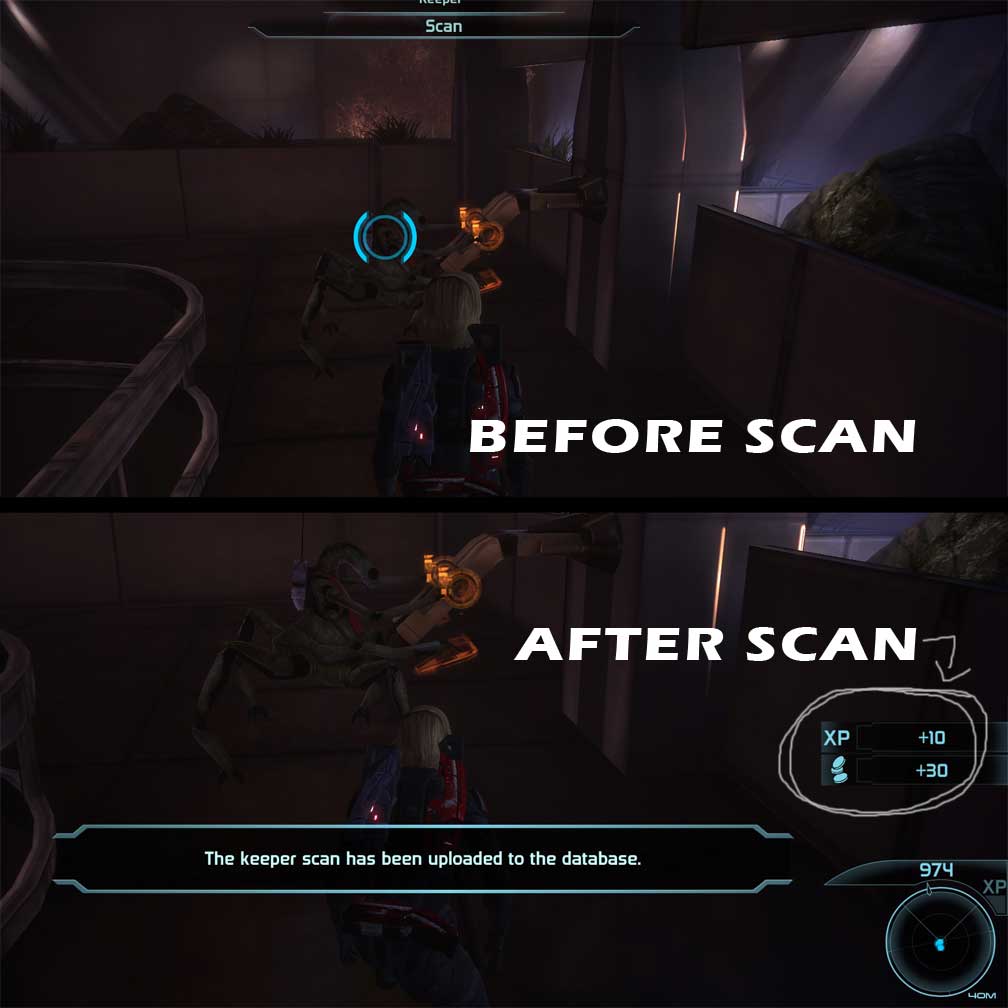
These Keepers would not be able to get this much work done without Starbucks' on every corner...JEZ SAYIN'!
In the game, “Mass Effect” there is a compelling concept of an advanced Citadel which houses technology both ancient and powerful…
The species which exist on the Citadel work for the betterment of the Galaxy, although the council members and their affiliates don’t always agree on the best course of action in which to ensure this betterment.
In the Mass Effect, “Codex” a player can learn about the rich history of the Citadel and its astounding technology. Both the architecture and the conceptual systems which support the Citadel make sense and are rooted in accepted near-future space technology modes of thinking. Yet there is one lingering issue which makes the Citadel an incomplete vision of the future.
The Citadel is supposed to house millions of life-forms which carry out their lives. Also, the Citadel is the home for a race of beings called, “The Keepers” which maintain the plethora of Citadel systems. These Keepers work tirelessly to keep the space station up and running…
But there isn’t a single Starbucks on the ENTIRE SPACE STATION!
Do you expect me to believe you can maintain this many interconnected systems without having an occasional latte? Imean, the council is probably so lazy not to investigate Saren because they’re all droopy cuz they ain’t got their iced coffee.
Saren was like, “I didn’t drop that one foo.”
And then my character, Solaria Shepard said, “Yeah right bro.”
Then the council was like, “What’evz, I can barely stay awake right now. Is that hologram girl goona start playing netflix…nevermind too tired..zzz.”
But yeah, that’s when Solaria (she’s actually a descendant of Helixia from my Skyrim RPG fan universe…or perhaps she is an ancestor from an adjacent timeline? ) decided to talk to this homeboy with eyeballs and help him out with his scan project for the Keepers. He’s trying to find out where they come from and if they’re manufactured or if they are living inside the station itself. He is curious about the world he lives in and Solaria was into finding out more as well.
If you do that side quest, you get 30 credits and 10XP every-time you successfully scan a Keeper. This money comes in handy early in the game because you can use it to purchase 100 credit licensees from vendors. I have a feeling these licensees are going to come in handy when I give them to the requisitions officer. Hopefully he can find me some good gear so we can get to the bottom of this Saren mystery.
-Tyler

The Universe and the Self may be illusions…but does that need to affect one’s actions?
Due to current advancements in technology such as holography, solid state hard drives and laser technology the nature of the universe is coming into question. Is this universe real or is it an illusion?
Although science and spirituality seem to constantly attempt to deal with this question in their own ways, philosophy is the best equipped piece of technology to handle this issue. The question has to do with fundamental truth and morality. And this philosophical approach handles both with relative ease.
First and foremost, one must recognize that knowing to an absolute degree is not necessary for a successful philosophical construct to do its work.
With that said, let us begin:
(The key-term: experiencer refers to an entity whom engages with a reality – yet does not have irrefutable proof that the reality whom he or she is engaged in is completely real)
If the world we live in is absolutely real, then the consequences for our actions would be real as well.
We see evidence of this on a daily basis. If one does not show up for work, he or she may be fired from a job. If one sincerely expresses to a family member that he or she loves that family member, he or she may experience connection and a state of happiness. The five senses are quite convincing in their argument that the world we live in is real.
On the other hand…
If the world we live in is an illusion, there would be discrepancies and contradictions inherent to the reality which would constantly cast doubt upon an experiencer who has an affinity for recognizing patterns.
We see evidence of this on a daily basis as well. If one goes to deep sleep, the consciousness of that person loses track of time. External stimuli like clocks, sunlight and constellations are required to reconvince the experiencer that he or she is no longer in a dream-state. After one participates in enough daily actions, responsibilities and other sense stimuli…the experiencer considers the current state to be the real one.
These two perspectives seem contradictory and can cause confusion or self-doubt. It is disturbing to think one who puts in tremendous effort in one’s existence is part of some unreal simulation. It is equally disturbing to think that this world and universe is so real and adamantine that no spiritual or unseen forces could exist. Yet this doubt is the fuel for a philosophical freedom.
If the experiencer is able to admit that he or she does not know whether the universe, world or self is completely real or unreal, a logical underpinning can support further constructs.
One such construct is the concept of simulated best.
In daily life, one is constantly encouraged by authority figures, external media influences and one’s own inner desire for self-growth to do his or her best. Yet with the advent of simulation technology such as virtual reality and the ever-increasingly graphically convincing computer-generated worlds, people in this modern era have the option to live out a percentage of their daily lives within simulated online and off-line worlds. In those worlds, the experiencer gets to either engage with the simulation as if it is a fantasy world where the experiencer can act out his or her darkest or most awe-inspiring dreams…or else the experiencer can treat the virtual environment as a training simulator where the illusion is accepted as a sort of setting, thus the experiencer put him or herself in virtual environment and technological limitations of hardware and software can be shrugged-off with minimal effort. The experincer makes a choice to accept the illusory simulation in order to get the most out of the experience. The “most” could be different for every experiencer who engages in the virtual world, some may be more interested in visually pleasing images, while others may be interested in combat and tactics. The exact same simulated world could generate completely different self-insights to different experincers.
To go into further detail, some simulations allow for interactivity which give experiencers choices and ways to directly affect their path. While it is possible to make a ridiculous mess out of a simulation by exploiting coding errors, it is also possible to achieve one’s personal best in many facets which may be impossible or illegal to express in one’s daily life.
For example: some simulations allow for experiencers to fly a helicopter. Although helicopter training is available to basically anyone, that does not necessarily mean everyone has the access to the financial resources and free-time required to engage in helicopter training. The end result is that those who have the resources to purchase a helicopter simulation may be able to get access to an experience which may have been out of his or her grasp. To take this one step further, those who choose to pay close attention during the helicopter simulation and enjoy the process, have potential to comprehend, respect and appreciate the helicopter and its intricacies. When one has the resources and time to actually train on a helicopter in his or her daily life, there is potential for the training to either be more enjoyable or else proceed at a more rapid rate than if no simulated training took place.
Just how the simulation can prepare one for the daily life, so can daily life prepare one for simulations. The process of experience is interchangeable and the only bottlenecks are technological limitations of the simulations and one’s own resistance to experiential immersion.
Yet our daily reality has no limitations to its thoroughness. If one want’s to look inside the leaf of a flower with a microscope, he or she can choose to do so. One will find the wonders of nature within each piece of plant tissue. There are no limits to how far one can look into this daily reality. There are no simulated framerate issues or pixelation problems from looking too closely at things with our naked eyes. And quite conversely, the universe of our daily lives is large enough to offer countless people to talk with and environments to explore. There are no conversation limits aside from the personal preferences of the two parties which decide to talk with each other.
Therefore, the concept of simulated best can be applied to even our daily reality. Just how one can temporarily suspend disbelief in a simulation in order to get the most out of it, one can temporarily suspend the requirements of complete knowledge of our daily reality in order to maximize the experience. Do you need to know how ice cream works in order to enjoy ice cream?
Another construct is the concept of simulated morality:
Knowing what is right from wrong is a core aspect to our upbringing and has tremendous value in our daily lives. This knowledge can make several experiences such as work, family life and education more enriching and less cumbersome than if one had no concept of morality. Whether or not morality is given by one’s family or by one’s society…it definitely can be trained, and experimented with in a simulated environment. By having the ability to choose a course of action in a simulation, one is able to see not only the consequences for the decisions in that very simulation, but an experiencer whom is aware of patterns can also gain an insight into the moral dispositions of the individual or teams who designed the simulation.
For example: If a simulation presents the experiencer with a choice and then patterns emerge from those choices, an experiencer can still engage in the simulation but occasionaly glean the moral biases or judgements of the individual or team who created the simulation. This may seem redundant, but it is important to understand the simulation is being discussed at this time – not the daily reality.
Imagine one is in a simulation with a choice. One can either build a can opener out of smaller parts, one can either drink a glass of water which was sitting in the refridgerator, or else one can do neither actions and the experiencer is forced to engage in an automatic cutscene video where the experiencer is handed a unopened bottle of water by another character in the simulation.
If the experiencer is faced with choices like this on a consistent basis and her or she is always punished for building a can opener with bruised fingers, invigorated by drinking the water from the refridgerator, or else is stimulated by the conversation from the character handing the bottle of water…an experiencer who has awareness of patterns can understand which actions are being cultivated by the creator or team of creators who designed the simulation itself.
This concept of simulated morality can be applied to our daily reality. The moral understandings between right and wrong which we glean within daily life can be applied and remembered for future use in simulations and the reflexive is also true. By making note of body language and intonation one can understand a great deal about another being and that knowledge has value in both simulation and reality alike.
Yet simulated morality goes far beyond simple knowledge. By combining simulated morality with simulated best, the complete factual truth about whether or not our universe is real loses value. The true value for our existence has to do with how we engage our reality, and how we proceed through our experiences. If one is living both daily life and simulated existence with the goal of experiencing to the fullest and expanding moral and knowledge awareness, the lines of distinction and walls of concern can become equipment for something greater.
-Tyler

Flashmobs are now being used as a form of group shoplifting - This could affect our freedom to assembly if it continues
Flashmobs, they were and still are interesting aspects to our ever growing society. Last year, we saw how flashmobs could be used as a form of group expression. Sometimes this expression took the form of organized dancing, and in some rare cases…it took the form of group violence. But now, flashmobs are being used as a way for youngsters to engage in rapid shoplifting.
Groups of young people are wearing concealing clothing and are shoplifting at convenience stores, and now even at retail department stores. This is a serious problem, not because of the clothing used or the age groups involved…but because of the effectiveness of group crime. Increased numbers of perpetrators means that more loss prevention staff will be required to prevent such group shoplifting. This raises the cost of doing business, because store-owners have to worry more about security. I
But aside from the financial implications, there are societal implications for this development in flashmob evolution. Up until now, flashmobs have been in a gray societal area. They weren’t considered gangs because they can be used for good or bad things. They weren’t considered charities for the exact same reason. But with flashmobs being activated for the sole purpose of shoplifting, a new concern must be addressed. That concern is how flashmobs used for shoplifting directly affect property rights and how this could be used as a way to affect freedom of assembly rights.
Do you remember the film Robocop from the 1980’s? There was a scene at the last third of the film where Robocop tried to arrest a senior member of the OCP corporation. Do you remember what happened? Since Robocop had his 4th “Directive” which said he couldn’t arrest and OCP executive and also since he had the 2nd directive to uphold the law…he suffered a sort of seizure or systems malfunction. Directives in that film can be analogous to our freedoms which are protected by the Bill of Rights.
The two conflicting rights I see here in this case are the First and Fifth Amendments. The first deals with the freedom of assembly and the second amendment deals with general property rights. And although someone might say, “Well the 1st amendment is first so it must be the best!” that doesn’t necessarily mean it overrides all the facts in this flashmob issue. Most importantly, one must understand that the United States of America is a business. And as a business, it’s primary objective is to create wealth and prosperity. That’s why petty theft and rioting is dealt with so harshly here, it is just too expensive to have security watching every window and guarding every bookcase. Every guard, every police officer, every weary employee who has to be “on the lookout” for thieves is diverting resources away from customer service opportunities and other money-making job duties.
Groups of young people may enjoy the “thrill” of shoplifting, but what they don’t realize is that they are affecting the system far more deeply than just “pwning” a local business. Society today observes everything and if flashmobs are used as an effective tool for systematic shoplifting, new levels of scrutiny may be exacted on people who travel in groups. This could create a more tense atmosphere for everyone involved, authority figures and customers alike. Imagine if any group of young people of 5 or more could potentially be a hostile flashmob ready to steal a companies products? The level of tension could directly affect businesses and this usually translates to more security, more tense shopping experiences where you need to wear fancy clothes just to buy a pair of shoes. Eventually, the end result of this type of societal tension escalation is usually greater separation between social groups. But in an environment where the economy is still struggling to get back on its feet, everyone should be treated as a potentially excellent customer. Therefore these flashmobs which are doing group shoplifting should reconsider their actions and community resources should be implemented to create fun and engaging opportunities for young people to feel fulfilled and also acquire status items which make them feel good as a consumer in a very competitive world.
-Tyler
Powered by WordPress