
My Delicious Homemade Pizza
Here is the recipe for the delectable and delicious homemade pizza that I made with my parents. My Mom and Dad made the dough themselves while I was sleeping but I was really impressed. I know they used olive oil and white flour. But I am not sure what else they used to make the dough. But when I came downstairs I rolled the dough. I used to work at a pizza parlor about 10 years ago, but I didn’t feel confident enough to toss and twirl the dough in the air. So I used a rolling-pin instead. In order to get the dough in the nice elliptical shape that you see in the picture, I rolled the dough in an outward motion. I made sure to have a thin layer of flour on the rolling-pin and underneath the pizza in order to make sure that it didn’t stick to the surface while I was rolling. When rolling the dough I tried to make it thin, but I didn’t want to tear the dough. So I made sure to not roll the same area over and over again. Instead I rolled the thickest areas and not in any particular order. Instead I kept an eye on the shape of the dough and rolled the areas that were the smallest. This way the dough will naturally have a round-ish shape. But remember, if your dough ball is too strangely shaped when you cut it, it will be hard to get a nice eliptical shape out of it.
After rolling the dough and getting a nice round shape, I pinched the edges of the dough to make a lip for the crust. Since my dough was very thin I wasn’t able to make a pronounced crust but even a small lip on the dough will help in keeping the sauce and toppings inside your pizza when you cook it. Now that the crust lip has been made by pinching and curling the dough, it was time for me to add the sauce. The guy at Bristol Farms at first recommended that we use Ragu for the sauce and I said, “I don’t think I want to use Ragu for the sauce on these pizzas.” And the guy got the point. So someone else found this higher quality sauce. It’s really important to use high quality sauce in your pizza. If you don’t make it yourself, try and pick a sauce that isn’t sweet. I personally despise sweet pizza sauce. I used a tablespoon to get the sauce out of the can and I spread the sauce by using the round back of the spoon to even things out. Try not to leave bald spots on your dough or else your pizza will probably burn in specific areas and won’t taste right. Usually a thin layer of sauce that comes to the edges of your crust is best.
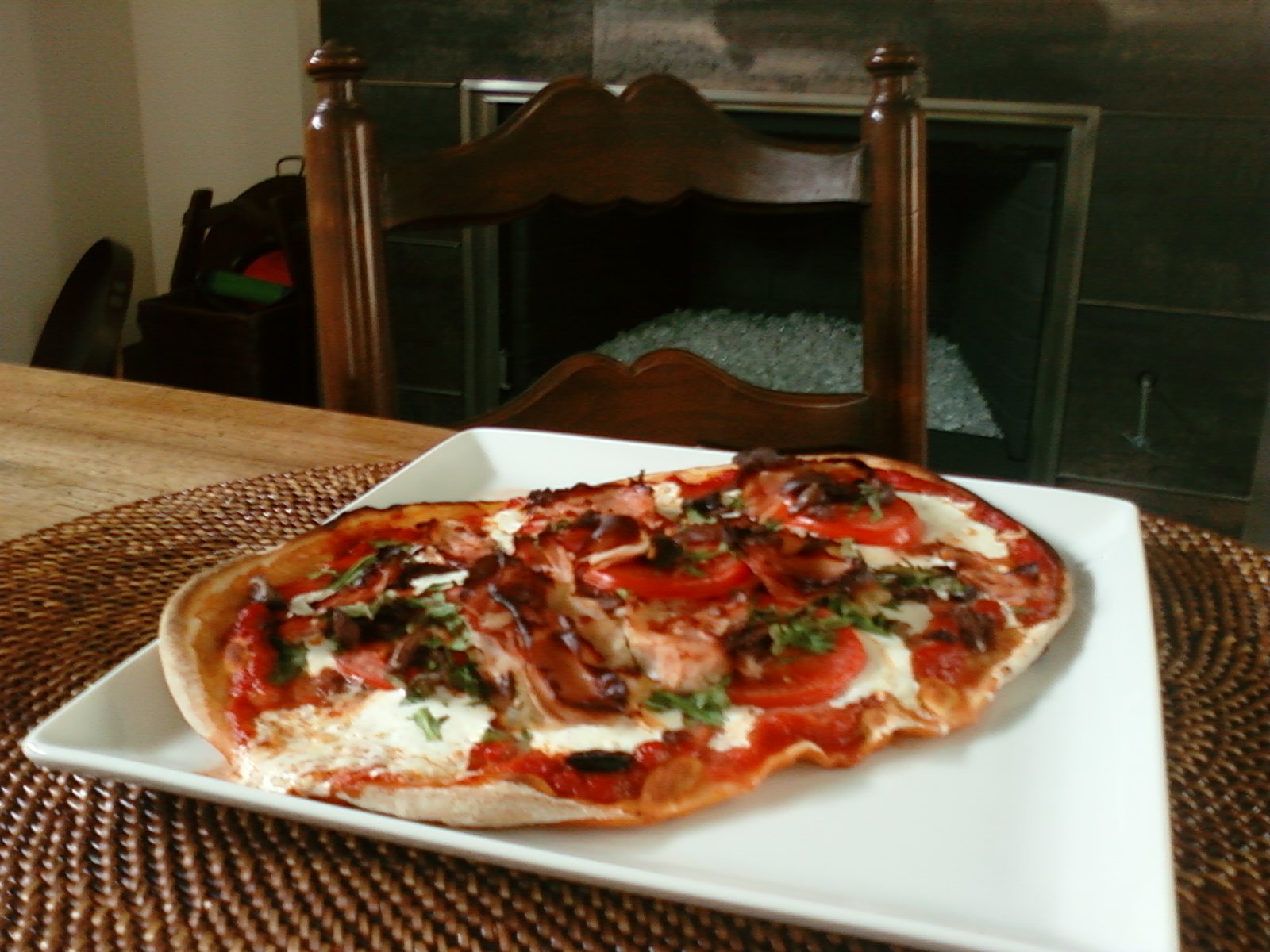
What a delicious pizza!
After the sauce was distributed I added the fresh buffalo mozzarella to the pizza. The mozzarella cheese was the kind that’s in water and it was easy to slice with a big knife. I used slices of mozzarella that were about a quarter inch thick. I placed the slices on the pizza near each other, but not letting them overlap. Also I gave each slice a sliver of room between the other cheese slices. The reason for this is because the cheese was going to melt and expand so it would naturally patch up the spots where the wasn’t cheese. Also you don’t want to put too much cheese on a thin crust pizza because it might be overwhelming and can make the pizza heavy.
After the cheese I added freshly sliced Roma tomatoes to the pizza. The slices were about the same thickness of the cheese and I only put about 5 slices on the pizza, leaving empty spots without tomatoes. The reason for this is because tomatoes taste great on pizza but they add to the wetness of the pizza. So you don’t want too many tomatoes making your pizza soggy. But a few tomatoes can really add a lot of flavor and fun texture.
The next thing I did was slice up some pitted olives that I got from the olive bar at Bristol Farms. It’s important to get pitted olives because you won’t want to go through the hassle of taking the pits out from olives when you are making a pizza. The olives were dark brownish-green colored and they were small and long. They were salty but I knew that was OK because the fresh mozzarella cheese would absorb a lot of the salt and make the olives taste great. So I sliced up the olives in the direction of the long way instead of the fat way and then put them on the pizza.
I bought some arugula the day before and it smelled great. I washed of a large handful of arugula and sliced them into thin strips. They were only about an eighth of an inch wide and I kept them as long as they were before I cut them. The arugula has a great flavor when it gets slightly crispy. The taste very clean and natural, and when heated their smell mixes with the cheese and brings out the flavor of the other toppings. I put a generous amount of arugula on the pizza because it is very light and goes well with almost any other topping. The main reason why I put the arugula on was because I knew I was going to add some ham to the pizza.
I can’t remember what kind ham we used but it was thinly sliced and wasn’t too salty. The reason why I didn’t add salty peperoni or ham on the pizza, was because I already had salty olives. So I wanted the ham to soak up some of the flavor of the olives and then be accented by the fresh flavor of the arugula. Similarly to the arugula the ham (since I put it on top of the pizza instead of underneath the cheese or other toppings) was slightly crisped on the edges to give it a delicious texture. I didn’t put the ham underneath the cheese, because I wanted the ham for the texture rather than having a ham flavored pizza. My goal was to have a more fresh, garden-like tasting pizza that was accented by the ham. This turned out very well because the ham was crispy on the edges and tender in the center.
OK! So here’s the secret of how I turned the circular pizza into a more elliptical one. I used a large, very wide spatula to take the pizza from the construction area onto a metal cookie tray. Then I transferred the pizza to the hot stone in the oven by being very careful. The wide spatula made it so the pizza spread out when it went on the pizza stone. It is very important that you keep your spatula that you use to transfer the pizza very clean because if it is dirty it can stick to the bottom of your pizza and can cause your pizza to deform.
I let my pizza cook a little less than ten minutes. I can’t remember exactly how long it was in the oven because I didn’t time it. Instead, I watched the cheese and the ham and the crust and waited for signs to show me when it was finished cooking. The first sign is that the cheese is melted and shows some of the browning and orange color displaying that it is cooked. Another sign is that the arugula is browned at the edges. Also the ham should start to curl a bit and should change in color. But the biggest sign is the crust shows a little blackening and browning, you don’t want it turning into a carbon cake. So make sure to keep a close eye on your pizza pie. If you are lucky, the juices from the Roma tomatoes will start to spill to the crust and will give the dough a golden color. This will make the crust crispy and is a good signal that your pizza is almost done. If you have a lot of meat on your pizza I recommend that you cook it thoroughly because you can die from eating uncooked or undercooked meat.
The end result was a beautiful pizza. I let it sit for a while on a plate to let the cheese congeal and so I wouldn’t burn myself from eating it. Then a couple minutes later I cut the pizza. Since it was an oblong elliptical shape, cutting it into conventional triangular slices wouldn’t work. So instead I cut the pizza into two and a half inch wide strips for hand held eating pleasure. The strips where about as long as half the length of the pizza. Except the end pieces since they were smaller, didn’t get cut in half.
Making personal sized pizzas with family is a lot of fun because everyone made different ones. And we talked a lot while cooking. It is important to have a good pizza stone because it makes a big difference if you are working with thin crust. The pizza stone distributes the heat evenly across the pizza and stores a little bit of the flavor of each pizza pie.
-Tyler